Epoxy Living Room Table Guide: Cost, DIY, & Best Ideas 2025
An epoxy living room table combines natural wood beauty with modern durability, creating stunning centerpieces that last decades. These resin-infused furniture pieces range from $300 for DIY kits to over $2,000 for custom designs, offering waterproof surfaces perfect for daily use. With proper installation, epoxy tables provide 20+ years of scratch-resistant functionality while showcasing unique wood grain patterns enhanced by crystal-clear resin finishes.
What is an Epoxy Living Room Table
An epoxy living room table consists of natural wood combined with two-part epoxy resin that fills voids, cracks, and spaces to create a smooth, glass-like surface. The resin typically measures 1/8 to 1/4 inch thick and cures to form an incredibly durable finish that highlights the wood’s natural beauty. Popular wood choices include walnut, oak, maple, and exotic species like bubinga or padauk that create striking contrast with clear or tinted resins.
Modern epoxy resin table designs incorporate LED lights, colored pigments, metallic powders, and embedded objects like stones or shells. The manufacturing process involves careful preparation, multiple resin pours, and extensive sanding and polishing that can take 2-3 weeks for professional results. These tables function as coffee tables, side tables, or accent pieces that serve as conversation starters in contemporary living spaces.
Epoxy Living Room Table Cost Breakdown
The cost of an epoxy living room table varies significantly based on size, wood quality, and customization level. DIY enthusiasts can expect to spend $150-400 on materials including epoxy resin ($50-120), wood slabs ($80-200), and finishing supplies ($20-80). Professional custom tables range from $800-3,500 depending on wood species, table dimensions, and design complexity.
Premium epoxy coffee table options featuring exotic woods like live-edge walnut or unique resin effects can cost $2,000-5,000 or more. Labor typically accounts for 60-70% of professional pricing, with skilled craftsmen charging $75-150 per hour for specialized epoxy work. Additional costs include delivery ($100-300), protective coatings ($50-150), and custom bases or legs ($200-800) depending on metal or wood construction preferences.
DIY Epoxy Table Kit Pricing
Complete epoxy living room table kits provide everything needed for home construction, typically priced between $200-600 for standard coffee table sizes. These kits include pre-measured epoxy resin, hardener, mixing cups, stirring sticks, and detailed instructions. Premium kits from companies like EpoxyPlus or TotalBoat cost $400-800 and include higher-grade resins with extended working times and superior clarity.
Professional Installation Costs
Professional epoxy table installation services charge $500-1,500 depending on complexity and location. This includes surface preparation, resin mixing and application, curing supervision, and final finishing. Many contractors offer warranties ranging from 2-5 years on their workmanship, providing peace of mind for significant investments in custom furniture pieces.
Best Epoxy Coffee Table Ideas for Living Rooms
River table designs remain the most popular epoxy coffee table style, featuring a flowing resin channel between two wood pieces that mimics natural waterways. Blue, turquoise, or clear resins create stunning visual effects, while LED lighting underneath adds dramatic ambiance for evening entertainment. These designs work exceptionally well in modern, rustic, and transitional living room styles.
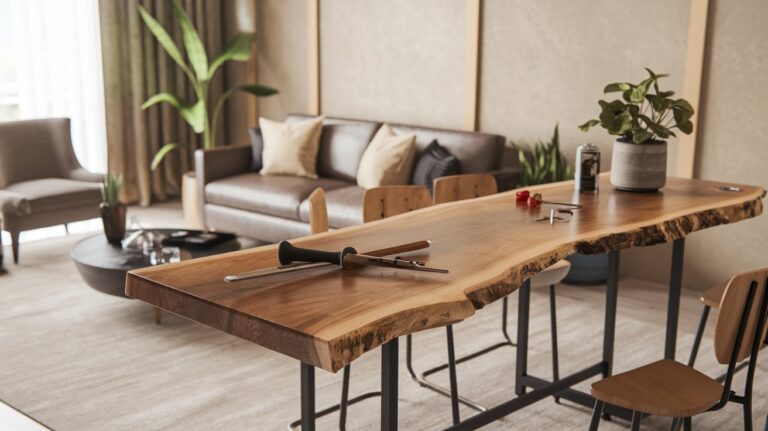
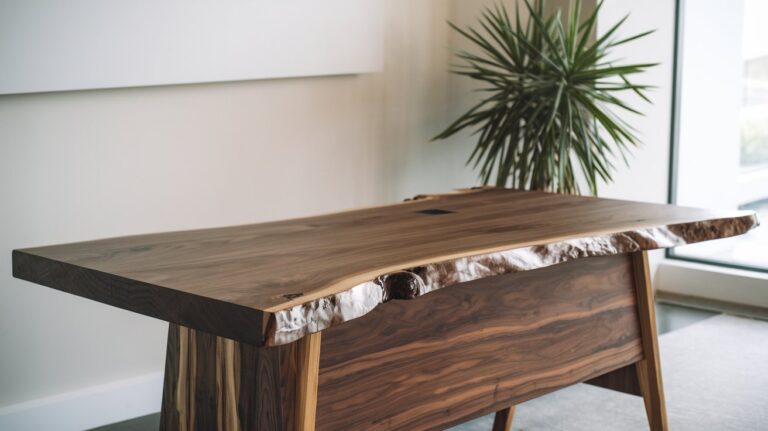
Ocean-themed epoxy resin tables incorporate white and blue pigments with crushed glass or shells to simulate beach scenes. Geometric patterns using colored resins in precise shapes appeal to contemporary design preferences, while glow-in-the-dark additives create unique nighttime effects. Live-edge designs preserve natural wood contours while filling bark inclusions and natural defects with clear or lightly tinted epoxy for organic aesthetics.
Color Combinations and Effects
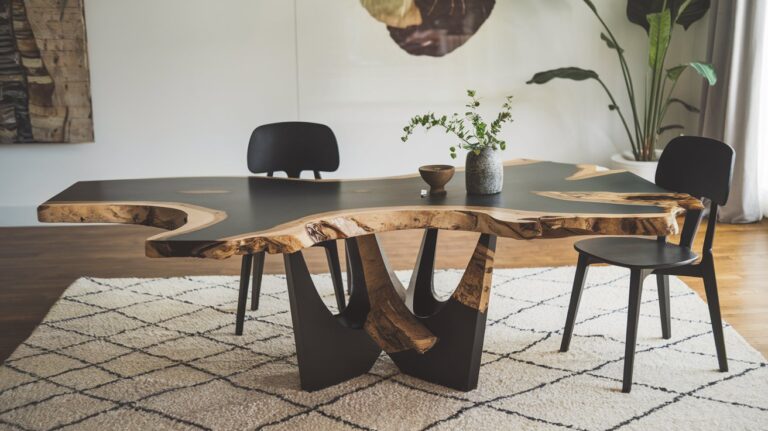
Popular epoxy coffee table ideas include metallic effects using gold, silver, or copper pigments that create luxury appearances suitable for upscale living spaces. Deep ocean blues paired with white wood create coastal themes, while black epoxy with blonde woods offers dramatic contrast. Translucent colors allow wood grain to show through while adding subtle tinting effects.
Functional Design Features
Modern epoxy living room tables incorporate practical elements like wireless charging pads embedded in the surface, hidden storage compartments, or removable sections for easy cleaning. Some designs include integrated cup holders, cord management systems, or modular sections that can be rearranged for different occasions and room layouts.
How Long Do Epoxy Tables Last
High-quality epoxy living room tables typically last 20-30 years with proper care and maintenance. The durability depends largely on resin quality, application thickness, and environmental conditions. UV-resistant epoxies maintain clarity and prevent yellowing for decades, while cheaper formulations may show discoloration within 5-10 years when exposed to direct sunlight.
Temperature fluctuations, humidity levels, and usage patterns significantly impact longevity. Tables in climate-controlled environments with minimal direct UV exposure can maintain their appearance for 25+ years. Regular cleaning with appropriate products and avoiding harsh chemicals or excessive heat helps preserve both the epoxy resin and underlying wood components throughout their extended lifespan.
Downsides of Epoxy Tables
The primary drawbacks of epoxy living room tables include susceptibility to scratching from sharp objects, potential yellowing over time with lower-grade resins, and difficulty in repairs if damage occurs. Heat sensitivity can cause white marks or cloudiness when hot items are placed directly on the surface without protective pads or coasters.
Cost represents another significant downside, with quality materials and professional installation creating substantial upfront investments. The curing process requires 7-14 days for full hardness, during which the table cannot be used. Some people experience sensitivity to epoxy fumes during installation, requiring proper ventilation and protective equipment for safe DIY epoxy table projects.
Maintenance Challenges
Maintaining epoxy tables requires specific cleaning products and techniques to avoid surface damage. Abrasive cleaners, acetone, or alcohol-based products can cause permanent cloudiness or etching. Professional refinishing may be necessary every 10-15 years to restore original clarity and smooth finish, adding to long-term ownership costs.
Environmental Considerations
Epoxy resins contain volatile organic compounds (VOCs) that can affect indoor air quality during installation and initial curing periods. Some formulations may not be environmentally friendly, and disposal of failed or damaged epoxy resin tables requires special handling due to non-biodegradable properties of cured epoxy materials.
DIY Epoxy Living Room Table Guide
Creating a DIY epoxy living room table requires careful planning, proper materials, and attention to detail throughout the multi-day process. Essential tools include mixing containers, stirring sticks, heat gun or torch for bubble removal, sandpaper (120-3000 grit), and polishing compounds. Work areas must be dust-free, temperature-controlled (70-75°F), and well-ventilated to ensure proper curing.
The process begins with wood preparation including flattening, cleaning, and sealing edges to prevent resin leaks. Multiple thin epoxy pours work better than single thick applications, with 24-48 hours between layers. Final steps include extensive sanding progression from 120 to 3000 grit, followed by polishing compounds to achieve mirror-like clarity on the epoxy coffee table surface.
Is Epoxy Good for Living Rooms
Epoxy living room tables excel in family environments due to their waterproof, stain-resistant properties that handle spills from drinks, food, or children’s activities without permanent damage. The smooth surface resists dust accumulation and cleans easily with damp cloths, making maintenance simple for busy households. These tables work particularly well in homes with pets since they resist scratching from claws better than traditional wood finishes.
The aesthetic versatility of epoxy tables allows them to complement various living room styles from ultra-modern to rustic farmhouse designs. They serve as stunning focal points that generate conversation while providing functional surfaces for daily use. However, families with very young children should consider potential safety concerns from sharp corners and the hard surface, though these issues apply to most coffee table designs regardless of material.
Related video about epoxy living room table
This video complements the article information with a practical visual demonstration.
Questions & Answers
What are the downsides of epoxy tables?
The main downsides of epoxy tables include susceptibility to scratching from sharp objects, potential yellowing with lower-grade resins over time, heat sensitivity causing white marks from hot items, high upfront costs ranging $800-3,500 for professional pieces, and difficulty making repairs if damage occurs. Some people also experience sensitivity to epoxy fumes during installation, requiring proper ventilation.
Is epoxy good for a living room?
Yes, epoxy is excellent for living rooms due to its waterproof, stain-resistant properties that handle daily spills and activities. The smooth surface resists dust, cleans easily, and works well with pets since it resists claw scratches better than traditional wood finishes. Epoxy tables serve as stunning focal points while providing functional surfaces that complement various decorating styles from modern to rustic designs.
How much does it cost to epoxy a table?
DIY epoxy table costs range $150-400 for materials including resin ($50-120), wood slabs ($80-200), and supplies. Professional custom epoxy tables cost $800-3,500 depending on size, wood quality, and design complexity. Premium exotic wood tables can reach $2,000-5,000, while complete DIY kits range $200-800 with all necessary materials and instructions included.
How long do epoxy tables last?
High-quality epoxy tables typically last 20-30 years with proper care and maintenance. Durability depends on resin quality, UV resistance, and environmental conditions. Tables with UV-resistant epoxies in climate-controlled environments can maintain appearance for 25+ years, while cheaper formulations may show yellowing within 5-10 years when exposed to direct sunlight. Regular cleaning and avoiding harsh chemicals help preserve longevity.
| Key Aspect | Important Details | Benefit |
|---|---|---|
| Cost Range | $150-400 DIY, $800-3,500 professional | Flexible budget options for all homeowners |
| Durability | 20-30 years with proper care | Long-term investment value |
| Maintenance | Waterproof, stain-resistant, easy cleaning | Perfect for busy family living rooms |
| Design Versatility | River tables, ocean themes, LED integration | Stunning focal points for any decor style |