Epoxy Black Walnut Table: Complete DIY Guide & Price 2025
An epoxy black walnut table combines the rich, chocolate-brown beauty of premium walnut wood with crystal-clear epoxy resin to create stunning furniture pieces. These tables have surged in popularity across the United States in 2025, offering both DIY enthusiasts and professional craftsmen an opportunity to create unique, durable dining tables that showcase natural wood grain patterns enhanced by protective epoxy coatings.
What is an Epoxy Black Walnut Table
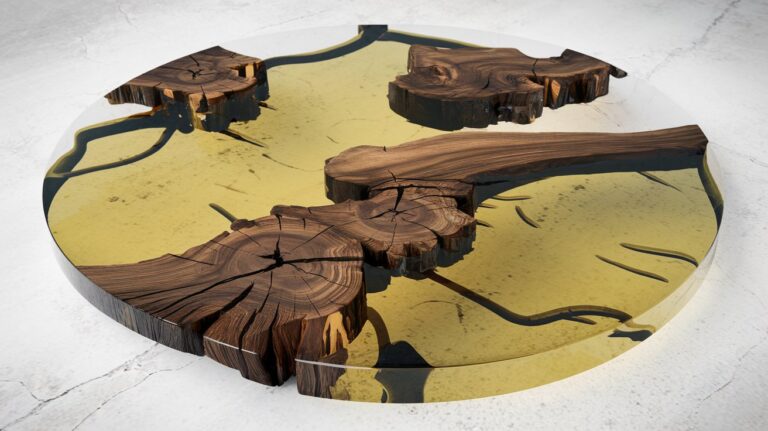
An epoxy black walnut table represents a modern fusion of traditional woodworking and contemporary resin techniques. These tables feature genuine black walnut slabs, known for their distinctive dark chocolate coloring and intricate grain patterns, sealed and protected with food-safe epoxy resin. The epoxy serves multiple purposes: it fills natural wood voids, creates river-like patterns, and provides an incredibly durable, water-resistant surface perfect for dining tables.
Black walnut remains one of the most sought-after hardwoods in North America, with prices reaching $8-15 per board foot in 2025. The wood’s natural beauty, combined with epoxy’s versatility, creates furniture pieces that can last decades with proper care. Epoxy resin table kits have made this craft more accessible to home woodworkers, with complete starter sets available for $150-400 depending on table size and resin quality.
Black Walnut Wood Properties for Table Making
Black walnut wood possesses exceptional characteristics that make it ideal for epoxy dining tables. This premium hardwood rates 1,010 lbf on the Janka hardness scale, providing excellent durability while remaining workable for both hand and power tools. The wood’s natural oils create inherent water resistance, making it perfect for dining applications where spills are common.
The grain structure of black walnut features beautiful contrast between lighter sapwood and darker heartwood, creating natural artistic patterns that epoxy enhancement brings to life. Black walnut dining tables showcase grain patterns that can include stunning cathedral figures, curly patterns, and burled sections that add thousands of dollars to finished piece values. Professional furniture makers report that properly finished black walnut epoxy tables maintain their beauty for 30-50 years with minimal maintenance.
DIY Epoxy Black Walnut Table Plans and Design
Creating epoxy black walnut table DIY projects begins with proper planning and design considerations. Standard dining table dimensions range from 30×48 inches for four-person tables to 36×84 inches for eight-person configurations. Table height typically measures 29-30 inches, with top thickness ranging from 1.5-3 inches depending on span and support structure requirements.
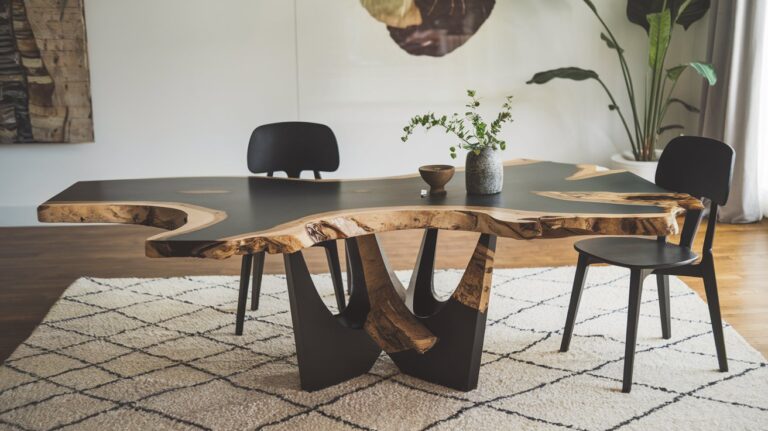
Design options for epoxy black walnut table plans include live-edge river tables, bookmatched slabs, and traditional rectangular tops with epoxy fill accents. River table designs remain most popular in 2025, featuring a central epoxy channel that mimics flowing water between two live-edge walnut pieces. These designs require 2-4 gallons of epoxy resin for typical dining table sizes, with costs ranging $200-600 for quality marine-grade epoxy systems.
Essential Tools and Materials List
Professional epoxy table for beginners requires specific tools and materials for successful completion. Essential equipment includes orbital sanders, belt sanders, router with flattening bits, moisture meter, digital scale for epoxy mixing, and heat guns for bubble removal. Safety equipment is crucial, including respirators, nitrile gloves, and adequate ventilation systems, as epoxy vapors can be harmful during curing.
Wood Selection and Preparation
Selecting quality black walnut slabs for epoxy river tables requires understanding moisture content, grain orientation, and defect evaluation. Kiln-dried slabs with 6-8% moisture content provide optimal stability for epoxy applications. Live-edge slabs should feature minimal checking, solid bark attachment, and consistent thickness variations under 1/4 inch to minimize preparation time and material waste.
Step-by-Step Epoxy Application Process
The epoxy application process for epoxy black walnut tables requires precise timing and temperature control for professional results. Begin with thorough slab preparation, including 120-grit sanding to remove mill marks and create proper epoxy adhesion. Seal any end grain with thinned epoxy to prevent excessive absorption during main pours.
Mix epoxy according to manufacturer specifications, typically 2:1 or 3:1 ratios by volume, using digital scales for accuracy within 2-3% variance. Epoxy resin table kit instructions specify working temperatures between 70-77°F with humidity below 50% for optimal curing. Pour epoxy in thin layers, typically 1/8-1/4 inch per application, allowing 24-48 hours between coats to prevent excessive heat buildup that can cause cracking or clouding.
First Pour and Void Filling
Initial epoxy pours focus on filling natural wood voids and stabilizing loose grain areas in the black walnut table surface. Use thin consistency epoxy mixed with appropriate pigments or dyes to achieve desired color effects. Popular 2025 color trends include metallic powders, glow-in-the-dark additives, and natural clear finishes that highlight wood grain patterns without color interference.
Final Flood Coat Application
Final flood coats on epoxy dining tables require careful calculation of resin quantities and application techniques. Calculate approximately 12 square feet coverage per mixed gallon of epoxy at 1/8-inch thickness. Use spreading tools like notched squeegees or foam rollers to achieve uniform thickness, immediately followed by propane torch or heat gun passes to eliminate surface bubbles within the 20-30 minute working window.
Epoxy Black Walnut Table Costs and Pricing
Understanding epoxy black walnut table price factors helps budget DIY projects and evaluate commercial offerings. Material costs for DIY projects typically range $800-2,500 for dining table sizes, including walnut slabs ($300-800), epoxy resin systems ($200-600), hardware ($100-300), and finishing materials ($200-800). Labor time averages 40-80 hours for first-time builders, extending to 120+ hours for complex river table designs.
Professional epoxy black walnut tables for sale command premium prices in the United States market, ranging from $3,500-15,000+ depending on size, craftsmanship quality, and design complexity. Custom commissioned pieces featuring exceptional walnut figuring or complex epoxy artwork can exceed $25,000 for dining sets. The investment in quality materials and proper techniques typically results in furniture pieces that appreciate in value over time while providing decades of functional use.
DIY Cost Breakdown
Detailed cost analysis for epoxy black walnut table DIY projects reveals significant savings compared to purchasing finished pieces. Black walnut slabs cost $8-15 per board foot, with typical dining tables requiring 15-25 board feet. Marine-grade epoxy systems average $45-85 per gallon, with river tables consuming 2-4 gallons. Additional costs include specialized tools ($200-500 for first projects) and finishing materials ($150-300 for stains, sealers, and protective coatings.
Professional vs DIY Value Comparison
Professional epoxy dining table Canada and United States markets demonstrate significant cost differences between custom work and DIY approaches. Professional tables include design consultation, material sourcing, expert craftsmanship, and warranties, justifying 300-500% markups over material costs. DIY approaches save $2,000-8,000 per table while providing valuable learning experiences and custom design control unavailable in commercial offerings.
Durability and Longevity of Epoxy Walnut Tables
Modern epoxy black walnut tables demonstrate exceptional longevity when constructed with quality materials and proper techniques. Marine-grade epoxy systems resist UV degradation, moisture penetration, and daily wear patterns for 25-40 years with minimal maintenance. The natural durability of black walnut, combined with epoxy protection, creates furniture pieces that often outlast their owners while maintaining structural integrity and aesthetic appeal.
Temperature resistance of quality epoxy systems ranges from -50°F to 150°F, making these tables suitable for heated homes, unheated workshops, and covered outdoor applications. Epoxy wood tables resist common damage sources including water rings, alcohol stains, and impact scratches that plague traditional wood finishes. Professional restoration services can refresh epoxy surfaces through light sanding and recoating, extending table life indefinitely with proper care protocols.
Common Problems and Disadvantages
Despite their popularity, epoxy tables present several disadvantages that potential buyers should consider. Weight represents a primary concern, with epoxy adding 15-25 pounds per square foot compared to traditional wood finishes. A typical 8-foot dining table can weigh 200-400 pounds, complicating moves and requiring robust support structures to prevent sagging or joint failure over time.
Heat sensitivity creates another limitation, as epoxy surfaces can show permanent marks from hot cookware placed directly on the surface. Temperatures above 120°F can cause clouding, surface deformation, or complete finish failure requiring expensive professional restoration. Epoxy dining tables also scratch more easily than traditional lacquer or polyurethane finishes, though these scratches often polish out with proper techniques and materials. UV exposure gradually yellows some epoxy formulations, particularly lower-grade systems, requiring periodic refinishing every 10-15 years in sun-exposed locations.
Related video about epoxy black walnut table
This video complements the article information with a practical visual demonstration.
Your questions answered
How much does it cost to epoxy a black walnut table?
The cost to epoxy a black walnut table ranges from $800-2,500 for DIY projects, including walnut slabs ($300-800), marine-grade epoxy resin ($200-600), and finishing materials ($300-1,100). Professional services cost $3,500-15,000+ depending on size and complexity. A typical 8-foot dining table requires 2-4 gallons of epoxy costing $200-600, with black walnut slabs adding $400-1,200 in material costs.
How long do epoxy wood tables last?
Quality epoxy black walnut tables last 25-40 years with proper care and maintenance. Marine-grade epoxy systems resist UV degradation, moisture damage, and daily wear while the natural durability of black walnut provides exceptional structural longevity. Professional restoration through light sanding and recoating can extend table life indefinitely, making these pieces generational furniture investments.
Is black walnut good for a dining table?
Black walnut is excellent for dining tables due to its 1,010 lbf Janka hardness rating, natural water resistance from inherent oils, and stunning grain patterns. The wood’s stability and workability make it ideal for epoxy applications, while its premium appearance and durability justify investment costs. Black walnut dining tables maintain beauty and functionality for decades with minimal maintenance requirements.
What are the disadvantages of epoxy tables?
Epoxy tables have several disadvantages including excessive weight (200-400 pounds for dining tables), heat sensitivity causing damage above 120°F, susceptibility to scratching, and potential UV yellowing over time. They’re difficult to move, require careful maintenance, and need specialized repair techniques. Initial costs are high, and refinishing requires professional services every 10-15 years in sun-exposed locations.
Can beginners successfully make epoxy black walnut tables?
Beginners can successfully create epoxy black walnut tables with proper planning, quality materials, and realistic expectations. Start with simple designs, invest in complete epoxy resin table kits, and allow 40-80 hours for first projects. Success requires following temperature and humidity guidelines, using proper safety equipment, and accepting learning curve investments in tools and materials totaling $1,200-3,000 for first tables.
Where can I buy epoxy black walnut tables for sale?
Epoxy black walnut tables are available through custom furniture makers, artisan marketplaces like Etsy, specialty woodworking shops, and high-end furniture galleries across the United States. Prices range $3,500-15,000+ for professional pieces. Custom commissioned work offers the best value and design control, while ready-made tables provide immediate availability at premium pricing from established craftsmen and furniture retailers.
| Key Aspect | Important Details | Benefit |
|---|---|---|
| Material Cost | $800-2,500 DIY, $3,500-15,000+ Professional | Significant savings with DIY approach |
| Durability | 25-40 years with proper maintenance | Generational furniture investment |
| Wood Properties | 1,010 lbf hardness, natural water resistance | Exceptional strength and beauty |
| Project Time | 40-120 hours for DIY completion | Rewarding learning experience |
| Maintenance | Minimal daily care, refinishing every 10-15 years | Low maintenance luxury furniture |